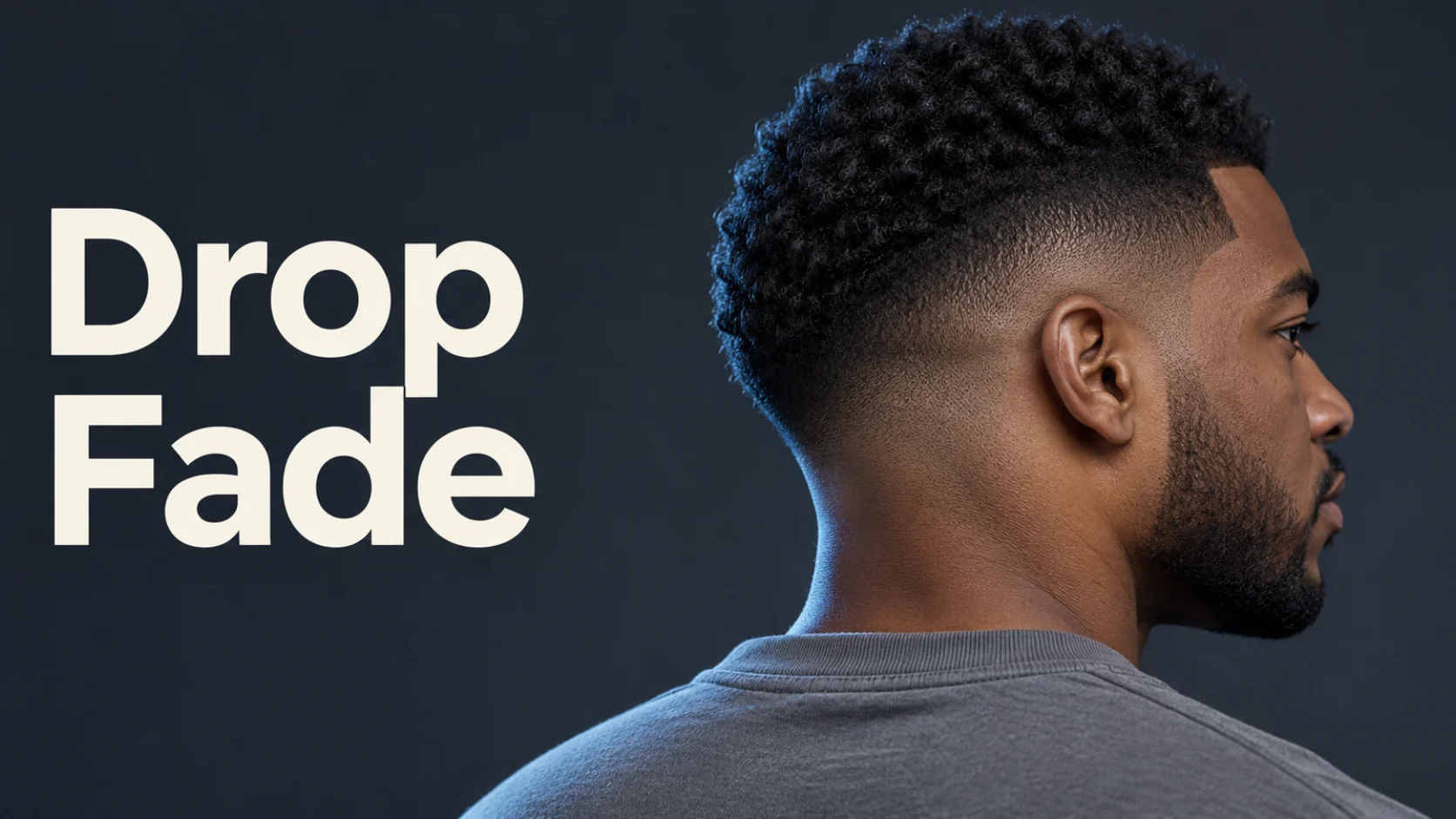
A drop fade curves downward behind the ear instead of running straight around the head. That shape creates a clean transition while keeping extra weight near the crown. You can combine the curved fade with short, medium, curly, straight, or textured hair.
Quick answer: A drop-style fade follows the head’s natural curve and dips lower behind each ear. You can choose a low, mid, or high starting point. Your barber can also finish the base at skin, stubble, or a longer guard length.
| Key detail | What to know |
|---|---|
| Defining feature | The fade line curves downward behind the ears. |
| Common heights | Low, mid, and high |
| Base options | Skin, #0.5, #1, or longer |
| Good hair types | Straight, wavy, curly, and coily |
| Popular pairings | Textured crop, curls, waves, quiff, buzz cut |
| Typical upkeep | About every two to three weeks for a crisp finish |
| Styling difficulty | Low to moderate, depending on the top |
Key Takeaways
- The curved line behind the ear defines this haircut.
- Fade height and fade shape are separate choices.
- Low versions keep more weight around the sides.
- Mid versions create noticeable contrast without looking extreme.
- High versions produce the strongest separation from the top.
- Skin finishes need more frequent cleanup than longer guard lengths.
- Side and rear reference photos help barbers understand the desired curve.
What Is a Drop Fade?
A drop fade gets its name from the downward movement of the fade line. The blend begins near the side and descends behind the ear. It then continues lower toward the back of the head. A regular fade often keeps a more level path around the sides and back. The curved version follows the rounded shape of the skull instead.
That difference can make the finished haircut look softer and more sculpted. The curve also leaves extra visual weight around the crown and upper back. That feature works especially well with fuller hairstyles on top. It can prevent the rear profile from looking too flat or disconnected.
Low, Mid, and High Options Explained
A low version begins close to the ear and natural hairline. It removes less hair from the upper sides. This option suits men who want a subtle transition or conservative finish. A mid version usually starts around the middle of the side. The curved outline becomes easier to see from several angles. It offers a balanced choice between a subtle and dramatic fade.
A high version begins closer to the upper sides or temple area. More scalp becomes visible below the transition. This creates strong contrast against curls, waves, crops, or other short styles. Starting height doesn’t determine the shortest clipper length. You can combine any height with skin or a guarded base. Discuss both choices separately before your barber starts cutting.
Popular Styles to Consider
Textured Crop With a Curved Fade
A textured crop keeps the top short while adding visible separation between strands. The curved sides make the top appear fuller without requiring significant length. Matte clay or paste can add definition without creating heavy shine.
This combination is practical for straight, thick, or slightly wavy hair. It also works well for men who prefer quick morning styling. Ask your barber to preserve enough top length for texture.
Curly Top With Faded Sides
Curly hair benefits from keeping weight above the rounded back of the head. The lower curve supports that shape while cleaning the sides. It can create definition without removing the natural character of your curls. Leave enough length for your curl pattern to form properly.
A curl cream can reduce frizz and improve separation. Avoid heavy products that make shorter curls appear greasy or compressed.
Waves With a Clean Fade
Waves need a clear outline so the pattern remains the main visual feature. A curved fade can frame that pattern around the sides and back. The result looks sharp without cutting through too much of the wave area.
Tell your barber where your wave pattern becomes strongest near the crown. That information helps determine the safest fade height. Regular brushing will support the pattern between barber visits.
Buzz Cut With a Curved Finish
A buzz cut exposes more of the fade shape than longer hairstyles. Every transition becomes visible because the top offers limited coverage. A balanced curve matters more with this combination. This style requires almost no daily styling. You may still need frequent edge and fade cleanup. Short hair can make new growth noticeable faster around the ears and neckline.
Quiff With Short Sides
A quiff leaves extra length near the front for lift and movement. Short curved sides create contrast without flattening the back profile. This pairing works well with straight or wavy hair. Use a blow dryer to direct the front upward before applying product. A light clay provides texture without excessive shine. Stronger products can help thicker hair stay lifted longer.
Short Afro or Coily Top
Coily hair can create a strong rounded shape above closely faded sides. Preserving weight toward the crown helps the silhouette remain balanced. The curved line can complement that natural profile. Ask your barber to protect the shape above the transition. Removing too much weight can change the rear outline significantly. A moisturizer designed for textured hair can help maintain softness.
Drop Fade vs. Other Fade Haircuts
Several barber terms describe different parts of a haircut. “Low” describes placement, while “skin” describes the shortest finish. Understanding these differences makes your barber request more precise.
| Fade type | Main characteristic | Best reason to choose it |
|---|---|---|
| Curved fade | Dips behind the ear | Rounded profile and added rear weight |
| Regular fade | More level transition | Clean and even appearance |
| Low fade | Starts near the hairline | Subtle contrast |
| High fade | Starts high on the sides | Strong contrast |
| Burst fade | Curves closely around the ear | Mohawks, mullets, and bold shapes |
| Skin fade | Finishes at bare skin | Sharpest possible base |
A burst fade and a curved fade can look similar near the ear. Their paths usually become different toward the back. A burst often preserves more length behind the ear and near the neckline.
Which Face Shapes Suit This Haircut?
Oval faces have enough balance to support most fade heights. You can focus mainly on your hair texture and preferred top style. Low, mid, and high placements can all work well. Round faces often benefit from extra height or texture on top. A mid or higher transition can strengthen that contrast. Avoid excessive width if you want the face to appear longer.
Square faces already have strong angles around the jaw. A lower curved transition can soften those lines slightly. A textured or moderately full top usually keeps the haircut balanced. Longer faces often look better without excessive vertical height.
Choose a lower or medium fade with controlled volume above. Keeping some side weight can prevent the face from appearing longer.
How to Ask Your Barber for a Drop Fade
Start by telling your barber the height you want at the sides. Then explain how short you want the base. Those two details prevent confusion before the barber creates the curve. A useful request might be, “I want a mid-curved fade with a half guard at the base.” Ask for the line to dip behind your ears. Then explain how much length you want left on top.
Bring reference photos showing both the side and rear profile. A front-facing image cannot clearly show the defining curve. Photos with similar hair texture provide the most useful comparison. Your head shape and growth pattern can affect the finished placement. Let your barber adjust the guideline slightly when necessary. A balanced result matters more than copying another person’s measurements exactly.
How Often Should You Maintain It?
Skin-level fades usually show growth quickly because the starting point is extremely short. Many men schedule cleanup appointments around every two weeks. You can wait longer if you prefer a softer, grown-in finish.
Guarded versions usually remain tidy for a little longer. A three-week interval may work well for many hairstyles. Your hair growth rate and preferred sharpness will determine the ideal schedule. The top may require less frequent cutting than the faded sections.
You can ask for a fade cleanup without removing much top length. This approach helps longer styles keep their shape.
How to Style the Top at Home
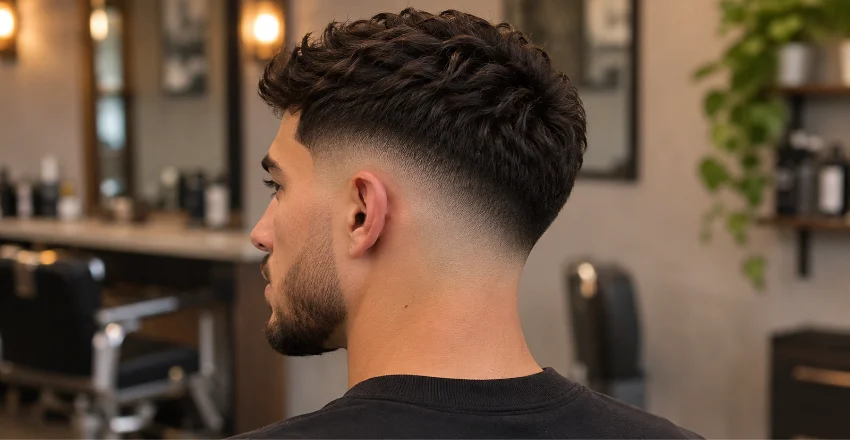
Short textured tops usually need only a small amount of matte product. Rub the product between your palms before applying it. Work from the back toward the front for even coverage. Quiffs and longer styles benefit from blow-drying before product application. Directing the hair while drying creates structure and volume.
Finish with clay, cream, or pomade based on your preferred texture. Curly and coily hair needs a different approach. Apply suitable moisture products while the hair remains slightly damp. Finger styling can preserve definition without disturbing the natural pattern.
Common Mistakes to Avoid
Choosing fade height without discussing the rear curve can produce the wrong silhouette. The barber needs to understand both placement and shape. Show where you want the lowest point behind your ear. Taking the fade too high can remove more crown weight than intended. Hair cannot be restored during the same appointment.
Starting conservatively gives your barber more room to adjust. Using only a front-facing reference photo can also create confusion. The defining detail sits along the side and rear. Bring at least one image that clearly shows those areas.
Frequently Asked Questions
What is a drop fade haircut?
A drop fade is a fade that curves downward behind the ears and toward the neckline. The height can still be low, medium, or high. The curved path distinguishes it from a more level fade.
Is this haircut good for curly hair?
Yes, the shape works especially well with curls and other fuller textures. It keeps useful weight near the crown while cleaning the sides. Your barber can adjust the height for your curl pattern.
What is the difference between a low fade and a curved fade?
A low fade describes where the transition begins on the side. A curved fade describes the direction that transition follows behind the ear. One haircut can combine both features.
How long does the haircut stay fresh?
The sharpest finish usually lasts longest when the sides receive regular cleanup. Skin finishes show new growth sooner than guarded fades. Many men refresh the sides every two or three weeks.
Can you combine it with a beard?
Yes, your barber can connect the sideburn area into a faded beard. The transition should match your beard density and preferred length. Mention your beard plan before the sideburn area gets cut.
Choosing Your Next Haircut
This haircut offers plenty of flexibility without requiring one fixed top style. Choose the fade height, shortest length, and hairstyle as separate decisions. That approach gives your barber clearer instructions and reduces surprises. Save reference photos that match your hair texture and desired finish.
Show both the side and rear angles during your appointment. A good barber can adapt the curved outline to your head shape and growth pattern. Explain the result you want instead of relying on one haircut name. Clear communication usually produces a more predictable result.