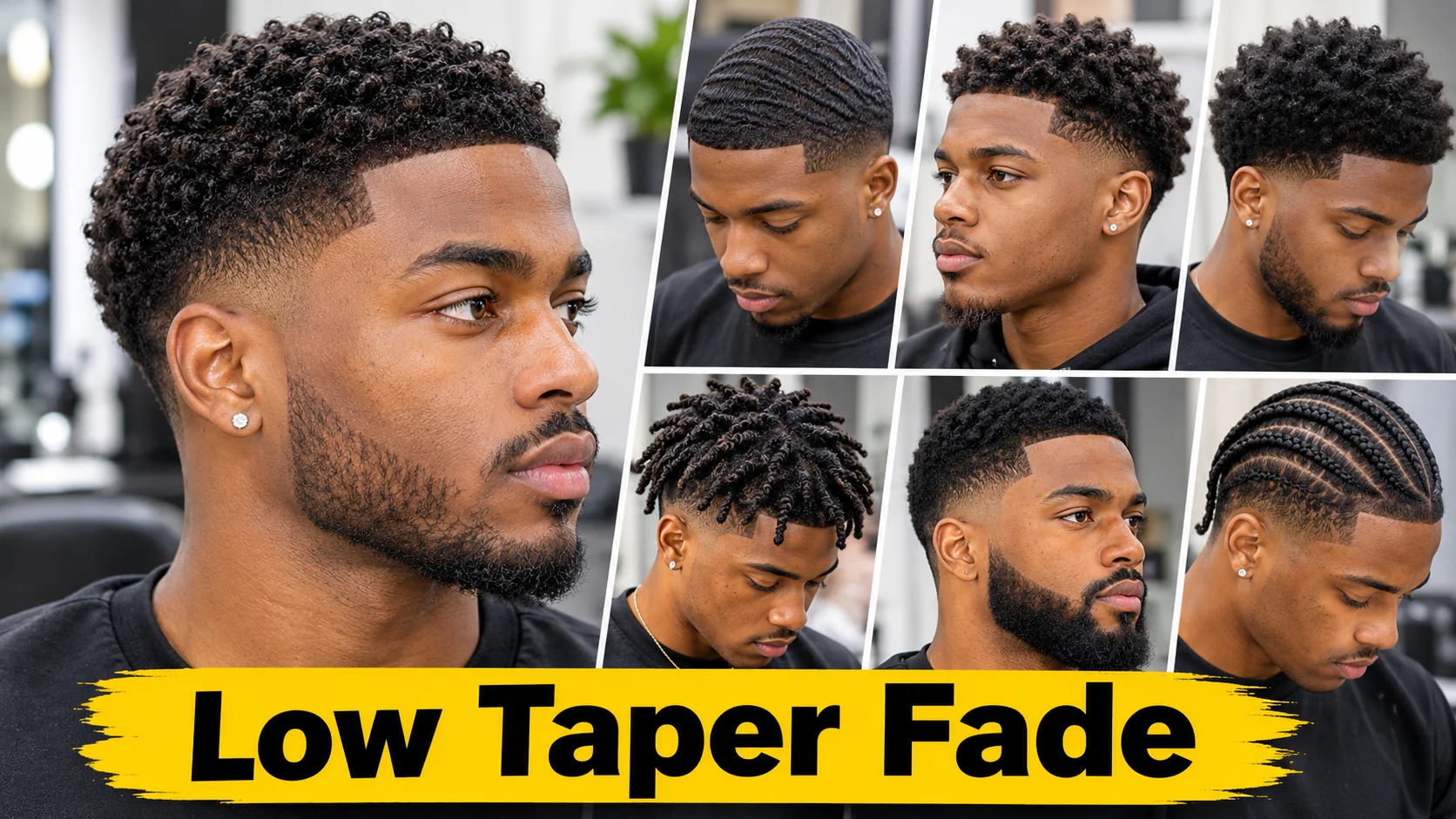
A low taper fade black male haircut offers a clean, modern appearance without removing too much natural hair. It keeps the sides and neckline neat while allowing curls, waves, coils, and other textures to stand out. Whether you prefer a sharp line-up or a natural finish, this haircut gives you plenty of styling options.
The best part is its flexibility. You can pair this cut with a short afro, 360 waves, sponge curls, twists, or a well-shaped beard. With the right barber instructions, you can get a haircut that suits your face shape and everyday routine.
Quick Information About This Haircut
| Feature | Details |
|---|---|
| Haircut name | Low taper fade |
| Best suited for | Natural curls, coils, waves, and textured hair |
| Fade placement | Temples, sideburns, and neckline |
| Top length | Short, medium, or long |
| Popular combinations | Waves, afro, twists, curls, and beard |
| Styling difficulty | Easy to moderate |
| Maintenance | Regular barber visits and basic hair care |
| Suitable occasions | Work, school, casual outings, and events |
What Is a Low Taper Fade for Black Men?
A low taper fade gradually shortens the hair around the temples, sideburns, and neckline. The transition stays close to the natural hairline instead of climbing high along the sides. This leaves more fullness above the ears and preserves the shape of your natural hairstyle.
For Black men, this approach works with several textures and lengths. It creates a neat outline while keeping the curls, coils, or waves as the main feature. You can also choose a softer shadow blend or a closer skin finish.
9 Stylish Low Taper Fade Black Male
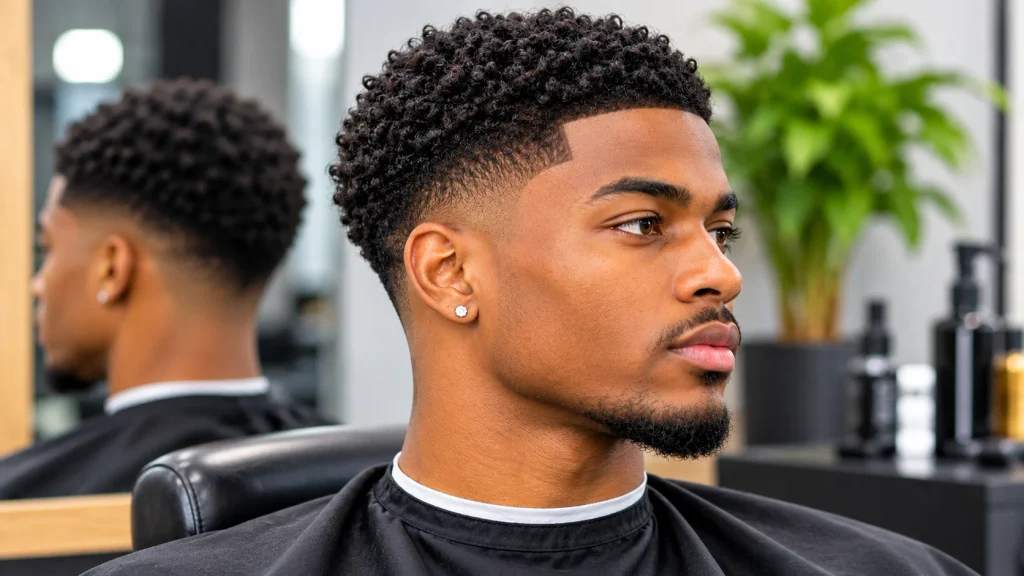
Choosing the right variation depends on your preferred top length and personal style. These nine options offer different ways to wear the same basic taper. Save a reference photo before visiting your barber.
1. Low Taper Fade With 360 Waves
360 waves create a polished appearance with a defined circular pattern across the scalp. The tapered temples and neckline keep the edges clean without disturbing the main wave pattern. This combination works especially well for men who already follow a consistent brushing routine.
Ask your barber to preserve the wave direction while cleaning up the sideburns. Avoid cutting too much into the upper sides because this can interrupt the pattern. A wave brush, suitable moisturizer, and durag can support your regular styling routine.
2. Low Taper Fade With Curly Hair
Natural curls add movement and texture to a neatly tapered haircut. Keeping extra length on top creates a fuller appearance and gives your curls room to form. The shorter sides provide contrast without taking attention away from your natural texture.
Use a lightweight curl cream to define your curls after washing. Ask your barber to shape the top according to your preferred curl length. This option works well for men who want a relaxed style with clean edges.
3. Low Taper Fade With Short Afro
A short afro offers a classic look that highlights natural hair texture. The taper cleans up the temples and neckline while preserving the rounded shape. You can choose a compact afro or leave additional height for more volume.
Ask your barber to shape the afro evenly before finishing the taper. A natural line-up can add definition without making the hairline look artificial. Regular shaping helps maintain the overall silhouette.
4. Low Taper Fade With Sponge Curls
Sponge curls create small, defined coils across the top of the head. Pairing them with a low taper gives the haircut a fresh outline and textured finish. This style suits men who enjoy a casual appearance without complicated styling.
Use a curl sponge gently on slightly damp hair. Apply a suitable styling product before creating the coils, and avoid excessive friction. Tell your barber how much length you want to preserve above the tapered area.
5. Low Taper Fade With Two-Strand Twists
Two-strand twists bring additional texture and shape to the haircut. The tapered sides create a neat contrast against the twists while keeping the overall style balanced. You can wear shorter twists for a compact appearance or longer ones for added movement.
Ask your barber to keep the taper below the main twist area. This helps maintain the style’s original shape between appointments. Avoid excessively tight twists because repeated tension can damage the hairline.
6. Low Taper Fade With a Line-Up
A line-up gives your haircut a more defined appearance around the forehead and temples. Combining it with a subtle taper creates a sharp finish without changing the length of the top. You can pair this option with waves, curls, a Caesar cut, or a short afro.
Ask for a natural line-up that follows your existing hairline. An excessively pushed-back edge can make the haircut look unnatural. Keep the corners soft if you prefer a less aggressive finish.
7. Low Taper Fade With a Full Beard
A beard combination connects your haircut with your facial hair. The barber gradually blends the sideburn area into the beard for a balanced appearance. This creates a consistent transition from the temples toward the jawline.
Choose a beard length that complements your face shape and hair density. Ask your barber to avoid an abrupt separation between the sideburns and beard. Regular beard shaping will help preserve the finished look.
8. Low Taper Fade With Textured Top
A textured top adds volume and dimension without requiring a complicated haircut. You can keep the hair short and controlled or leave extra length for a fuller silhouette. The tapered edges help frame the hairstyle and create a clean profile.
This variation works with different curl patterns and natural hair lengths. Ask your barber to use scissors where appropriate to preserve the texture. A light styling cream can help maintain definition without weighing the hair down.
9. Low Taper Fade With Braids or Cornrows
Braids and cornrows offer another way to combine natural styling with clean edges. The taper keeps the temples and neckline tidy while the braided pattern creates visual interest. You can choose straight-back cornrows or other patterns that suit your preferences.
Tell your barber and braider how the finished style should connect. Avoid braids that feel painful or excessively tight around the hairline. Comfortable styling helps reduce unnecessary tension on your scalp.
How to Choose the Right Style for Your Face Shape
Your face shape can help you decide how much height and width to keep in your haircut. The goal is to create a balanced appearance rather than follow rigid styling rules. Consider these general suggestions when discussing your cut.
| Face shape | Suggested variation | Styling suggestion |
|---|---|---|
| Round | Textured top or short afro | Add some height |
| Oval | Waves, curls, or twists | Most proportions are flexible |
| Square | Waves or short curls | Keep the outline balanced |
| Diamond | Curly top or textured crop | Preserve some width |
| Heart | Medium curls or twists | Avoid excessive height |
Your natural hair density and personal preference matter just as much as face shape. Bring photos showing the front, sides, and back of your preferred haircut. These references help your barber understand the proportions you want.
Low Taper vs. Mid Taper vs. High Taper
Not every taper creates the same appearance. The main difference is where the shortened section begins and how much hair gets removed from the sides. Understanding these differences helps you communicate clearly with your barber.
| Fade type | Placement | Overall appearance |
|---|---|---|
| Low taper | Near the temples and neckline | Subtle and natural |
| Mid taper | Around the middle of the sides | More visible contrast |
| High taper | Higher toward the upper sides | Bold and noticeable |
A low taper is a good starting point if you want to preserve fullness around your head. A mid taper creates a stronger transition while keeping some length above it. A high taper suits men who prefer a more dramatic change.
What Should You Tell Your Barber?
Clear instructions can make a big difference to your finished haircut. Instead of asking for a generic fade, explain the placement, top length, and finish you prefer. A reference photo can also prevent confusion.
You can use this simple barber script:
I want a low taper around my temples, sideburns, and neckline. Keep the fade low and preserve the natural fullness on top. Give me a clean but natural line-up, and blend my beard if needed. Please don’t push my hairline back.
Discuss the clipper length before the cutting begins. If you want a skin-close finish, mention that specifically because a shadow taper looks different. Ask your barber to show you the taper height before removing additional hair.
How to Maintain Your Haircut
Regular maintenance helps your haircut retain its shape. Your ideal barber schedule depends on how quickly your hair grows and how sharp you want the edges. A softer finish usually allows more time between appointments.
Consider these practical maintenance habits:
- Schedule regular trims: Many people prefer a touch-up every two to three weeks.
- Clean your scalp: Use a shampoo routine that suits your hair and scalp.
- Condition regularly: Conditioner helps keep textured hair manageable.
- Moisturize when needed: Choose products suited to your hair’s needs.
- Protect your hairstyle at night: Consider a satin or silk covering.
- Avoid excessive brushing: Use suitable tools and gentle techniques.
- Maintain your beard: Keep facial hair shaped and connected to the sideburns.
The American Academy of Dermatology recommends conditioning after washing and avoiding hairstyles that create excessive tension. Its Black hair care guidance also discusses gentle styling and reducing damage. These habits support healthier hair while helping you enjoy your chosen haircut.
Common Mistakes to Avoid
Even a well-planned haircut can lose its shape when the details are overlooked. Communicating your preferences before the barber starts can prevent several common problems. Keep these points in mind during your appointment.
- Choosing a fade that starts higher than requested.
- Removing too much length from the top.
- Asking for an overly aggressive line-up.
- Ignoring the transition between the sideburns and beard.
- Using excessive styling products.
- Keeping braids or twists uncomfortably tight.
- Skipping regular cleaning and conditioning.
Remember that a haircut should work with your natural hair pattern. You don’t need to copy every detail from a reference photograph. Ask your barber to adapt the style to your hairline, density, and preferred maintenance routine.
Frequently Asked Questions
Is a low taper fade black male haircut suitable for all hair types?
This haircut works with many natural textures, including tight coils, loose curls, and waves. Your barber can adjust the blend and top length to suit your hair. The finished appearance will depend on your natural texture and preferred style.
How long does a low taper fade last?
The haircut’s appearance depends on your growth rate and preferred level of sharpness. Many men schedule a refresh every two to three weeks. You can wait longer if you prefer a softer, grown-out appearance.
Can I get a low taper fade with 4C hair?
Yes, you can combine this haircut with dense 4C coils. Ask your barber to preserve enough length and shape on top. A gradual blend can frame your natural texture without removing unnecessary bulk.
Is a low taper better than a mid taper?
Neither option is universally better because they create different appearances. A low taper keeps the shortest section near the hairline, while a mid taper creates more visible contrast. Choose according to your preferred silhouette and styling routine.
Does a low taper fade need a line-up?
No, a line-up is optional rather than essential. You can choose a natural hairline for a softer finish or defined edges for a sharper appearance. Discuss your preference before the barber uses the trimmer.
Can I combine a low taper with a beard?
Yes, the sideburn area can gradually connect with your facial hair. Ask your barber to match the blend to your beard density. Regular beard shaping helps keep the transition looking consistent.
Final Thoughts
A low taper fade gives Black men plenty of ways to express their personal style. You can combine it with waves, curls, afros, twists, braids, or a full beard. The key is choosing a top style and taper height that complement your natural hair.
Before your next appointment, save a few reference photographs and explain your preferred finish. Ask your barber to preserve your natural hairline and avoid removing more length than necessary. With suitable care and regular shaping, you can maintain a clean haircut that fits your everyday routine.